
Coz.IA
Recipe app for Android and iOS that combines ingredient recognition from photos with AI to generate personalized cooking suggestions.
- Year
- 2026
- Type
- App
- Status
- In production
- Source code
- Proprietary
Stack
- React Native
- Expo
- TypeScript
- Supabase
- OpenAI
- Google Cloud Vision
- RevenueCat
About the project
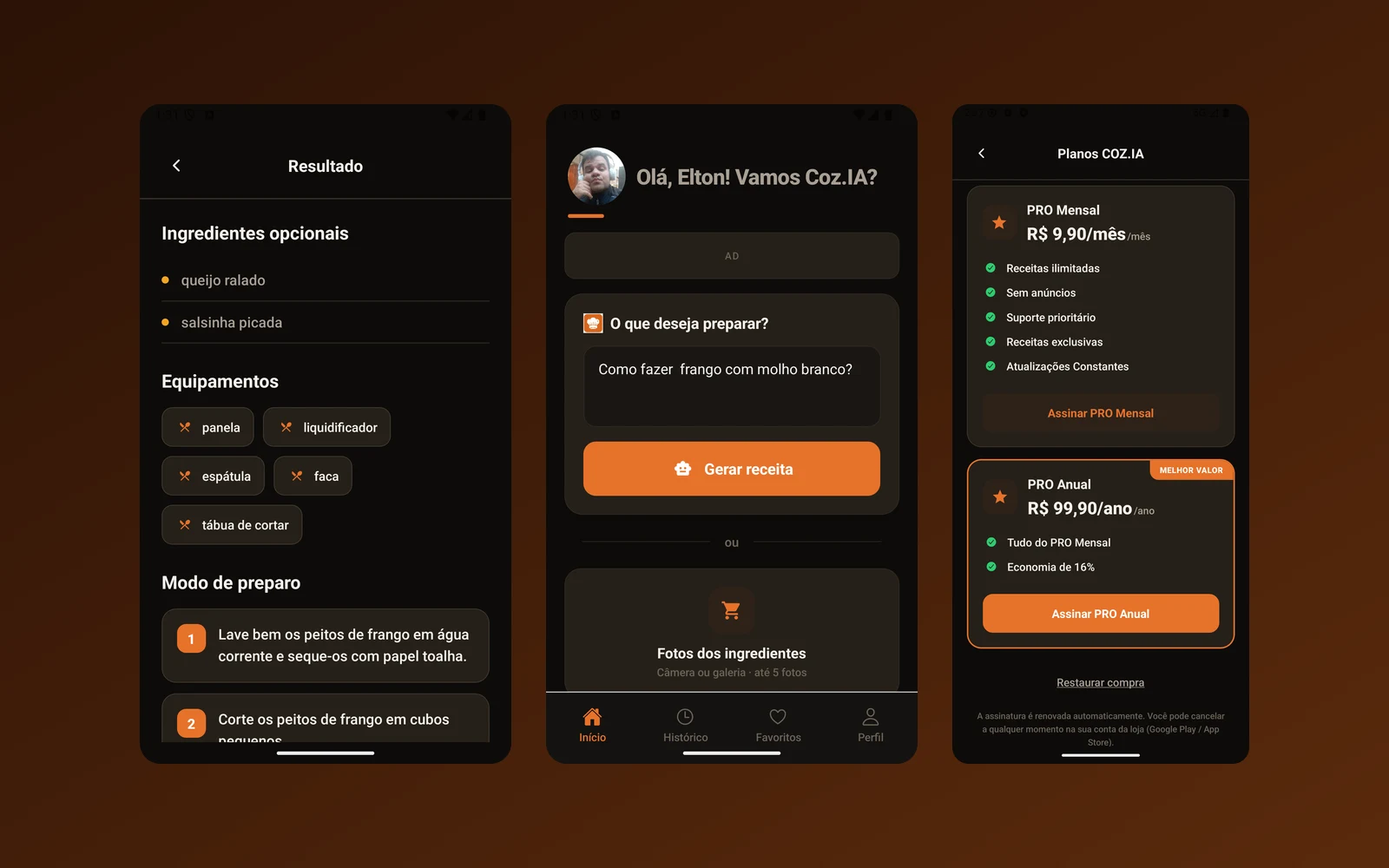
Coz.IA is an Android and iOS app that turns ingredients available at home into recipe suggestions. It combines image recognition and language models to personalize cooking content. The website introduces the product and links to its app store listings.
Problem
Searching for a recipe by dish name does not always help people make use of the ingredients they already have. Coz.IA starts with those ingredients and reduces the effort of entering each one manually.
Solution
Users type their ingredients or submit a photo from the camera or gallery. Image recognition suggests the items present, and confirmed ingredients are used to generate recipes with cooking instructions tailored to the information provided.
My role
I designed and built the app, including user flows, architecture, data modeling and the interface. I integrated the AI services and subscriptions and managed its release on Google Play and the App Store.
Key features
- Recipe generation from available ingredients
- Ingredient recognition from camera or gallery photos
- Cooking instructions with text-to-speech
- Recipe history and favorites
- Recipe export and sharing
- Free and premium plans
Architecture and technical decisions
The app uses React Native, Expo Router and TypeScript, with a shared codebase for Android and iOS. Supabase handles data storage, authentication and access control, while RevenueCat manages subscriptions.
AI responses are structured and validated before reaching the interface. This step checks whether the expected fields are present so ingredients and instructions can be displayed consistently.
The app also includes fallback flows for failed AI or network requests, allowing these errors to be handled within the user experience.
Technical challenges
- Validating generated content. Requesting a format does not guarantee that the model will follow it. Validation protects the interface from responses with an unexpected structure.
- Tuning ingredient recognition. The confidence threshold balances incorrect suggestions against ingredients missed in the image.
- Managing request costs. After photo recognition, recipe generation uses confirmed ingredients as text, reducing the amount of data sent at that stage.
Outcome
Published on Google Play and the App Store.
Technologies
React Native, Expo, TypeScript, Supabase, OpenAI, Google Cloud Vision and RevenueCat.